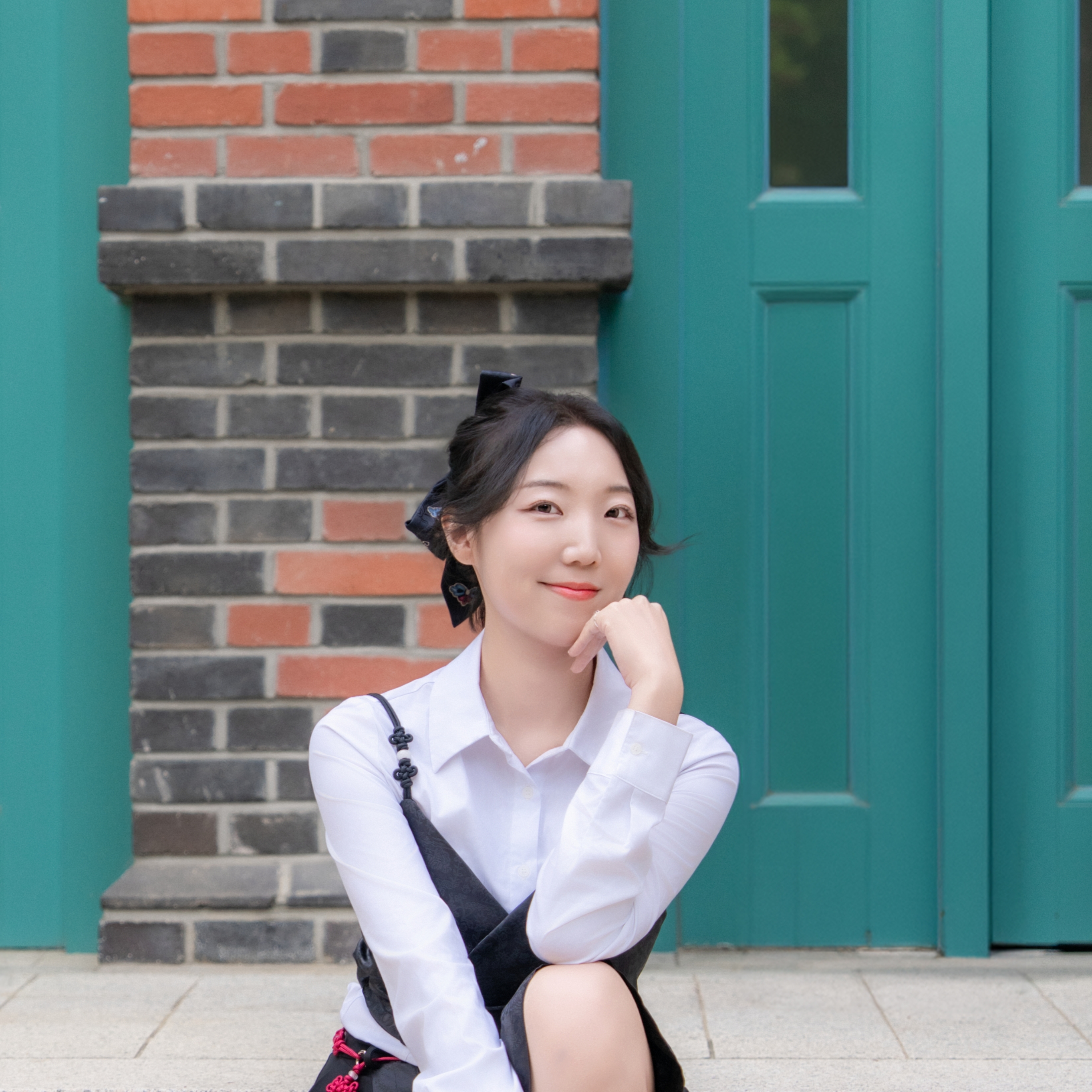
Sangyoon Bae
Ph.D. Candidate · Interdisciplinary Program in Artificial Intelligence
Seoul National University
I build physics-informed foundation models for scientific systems — embedding the structure of the data-generating process directly into architecture and training. My focus is scientific time-series: signals acquired indirectly and often unstructured, where physics-grounded inductive biases are what turn latent structure into a learning signal.
2 sole first-author papers (ICLR 2026, Communications Biology) · 2 sole first-author papers under review · 1 co-first-author paper (ICASSP 2024) · 6+ peer-reviewed publications · Models evaluated on datasets up to 49k+ subjects across neural, climate, and population-scale data
- 2026 Preprint Pretraining Shapes Spectral Structure released — architecture- and strategy-conditional prediction of OOD robustness in foundation models. arXiv:2610.09709.
- 2026 Preprint Neural Data Needs Semantic Tokenization released — behavioral events as boundaries of session-transferable tokens. arXiv:2610.03001.
- 2026 Position Joining Neurosoft Bioelectronics SA (Geneva, Switzerland) as a Machine Learning Scientist Intern — neural foundation models for brain–computer interfaces. Oct 2026 – Jan 2027.
- 2026 Grant Awarded the Doctoral Student Research Grant (Principal Investigator) from the National Research Foundation of Korea (NRF), 2026–2027 — KRW 25M.
- 2026 Preprint PIMSM released — Physics-informed multi-scale Mamba for stable neural representations under distribution shift. arXiv:2605.16351.
- 2026 Paper MBBN accepted at Communications Biology — Learning brain dynamics across distinct scaling regimes reveals psychiatric signatures.
- 2026 Preprint INCAMA — Latent-space causal discovery from indirect neuroimaging observations released. arXiv:2602.09034.
- 2026 Paper POYO-CAP accepted at ICLR 2026 — Decoding Dynamic Visual Experience from Calcium Imaging via Cell-Pattern-Aware Pretraining.
- 2025 Award Best Paper Award (Co-Author) at IEEE International Conference on Quantum Computing and Engineering (QCE).
- 2025 Paper Resting-state fMRI analysis using Quantum Time-series Transformer accepted at IEEE QCE 2025.
Decoding Dynamic Visual Experience from Calcium Imaging via Cell-Pattern-Aware Pretraining
Learning brain dynamics across distinct scaling regimes reveals psychiatric signatures
Pretraining Shapes Spectral Structure: Architecture- and Strategy-Conditional Prediction of OOD Robustness in Foundation Models
Neural Data Needs Semantic Tokenization: Behavioral Events as Boundaries of Session-Transferable Tokens
PIMSM: Physics-Informed Multi-Scale Mamba for Stable Neural Representations under Distribution Shift
Latent-Space Causal Discovery from Indirect Neuroimaging Observations
Quantum Privacy Aggregation of Teacher Ensembles (QPATE) for Privacy-preserving Quantum Machine Learning
Macro2Micro: Cross-modal Magnetic Resonance Imaging Synthesis Leveraging Multi-scale Brain Structures
Resting-state theta phase-gamma amplitude coupling as a biomarker for the transdiagnostic dimensional approach in psychiatric disorders
Physics-Informed Multi-Scale Mamba for Dynamical Systems
- Formalizes temporal kernel mismatch as a failure mode under distribution shift; derives scale-specific SSM discretization from spectrum-estimated knee frequencies with A-scale regularization
- HCP fMRI: highest representation stability (CKA 0.812) under temporal truncation; strongest low-resource accuracy at 1% supervision
- Weather-5K: lowest variable-wise MAE across all horizons on held-out-station OOD forecasting (15.2% avg MAE reduction vs. best baseline)
Curriculum Pretraining for Heterogeneous Scientific Data
- Identified “scaling collapse” in SSL pretraining on heterogeneous scientific data: indiscriminate training degrades performance as noisy signals dominate the loss
- Solution: use higher-order statistics (skewness/kurtosis) to identify statistically regular subsets; domain-informed curriculum — pretrain on predictable signals first, fine-tune on stochastic ones
- Unlocks monotonic scaling and 1.98× data efficiency; validated on 200k+ calcium imaging recordings
Physics-Aware Causal Discovery from Indirect Measurements
- Recasts causal discovery from indirect neuroimaging as a conditional identifiability problem: physics-aware inversion (HRF deconvolution, EEG source localization) coupled with delay-aware Mamba-based latent causal discovery
- Proved identifiability reduction with inversion-error propagation bound
- 2–3× F1 improvement over baselines on TVB simulations; zero-shot transfer to HCP motor-task fMRI recovers canonical visuo-motor pathways with 4× higher recall
Physics-Derived Multi-Band Attention for fMRI
- Derives attention mechanism from the physics of scale-free power-law spectra: decomposes fMRI signals into domain-informed frequency bands, applies specialized self-attention per band
- Physics-grounded pretraining loss (network communicability) anchors optimization
- Trained at scale on 49,673 individuals; up to 41.36% AUROC improvement on psychiatric classification
Neurosoft Bioelectronics SA
Remote (Republic of Korea) · Geneva, Switzerland
Mila — Quebec AI Institute, Montréal
Advised by Prof. Blake Richards
Brookhaven National Laboratory
Advised by Dr. Shinjae Yoo
Institut de Neurosciences des Systèmes, Aix-Marseille Université
Advised by Prof. Viktor Jirsa
Laboratory of Neurobiology, Seoul National University
Laboratory of Genes and Development, Seoul National University
Ph.D. Candidate — Interdisciplinary Program in Artificial Intelligence
Seoul National University, Seoul, South Korea · September 2021 – Present
B.S. — Biological Sciences
Student-Designed Minor: Computational Neuroscience for Human Behavior and Cognition
Seoul National University, Seoul, South Korea · March 2015 – August 2021
Wet-lab training: neurosurgical procedures (cranial window implantation, brain tissue sectioning), forward genetic screening in C. elegans, PCR, Western blot.
- 2026–27 🏆 [Principal Investigator] Doctoral Student Research Grant — National Research Foundation of Korea (NRF) · KRW 25M
- 2025 ⭐ Best Paper Award (Co-Author) — IEEE International Conference on Quantum Computing and Engineering (QCE)
- 2024 IPAI Development Fund Scholarship — Seoul National University
- 2023 Sung-Am Educational Foundation Scholarship — South Korea
- 2021–23 Graduate School of Artificial Intelligence Fellowship — Seoul National University
Mentored 8 undergraduates, master’s students, and high-schoolers across neuroscience and AI. Led weekly reading groups and code reviews; resulted in peer-reviewed publications.